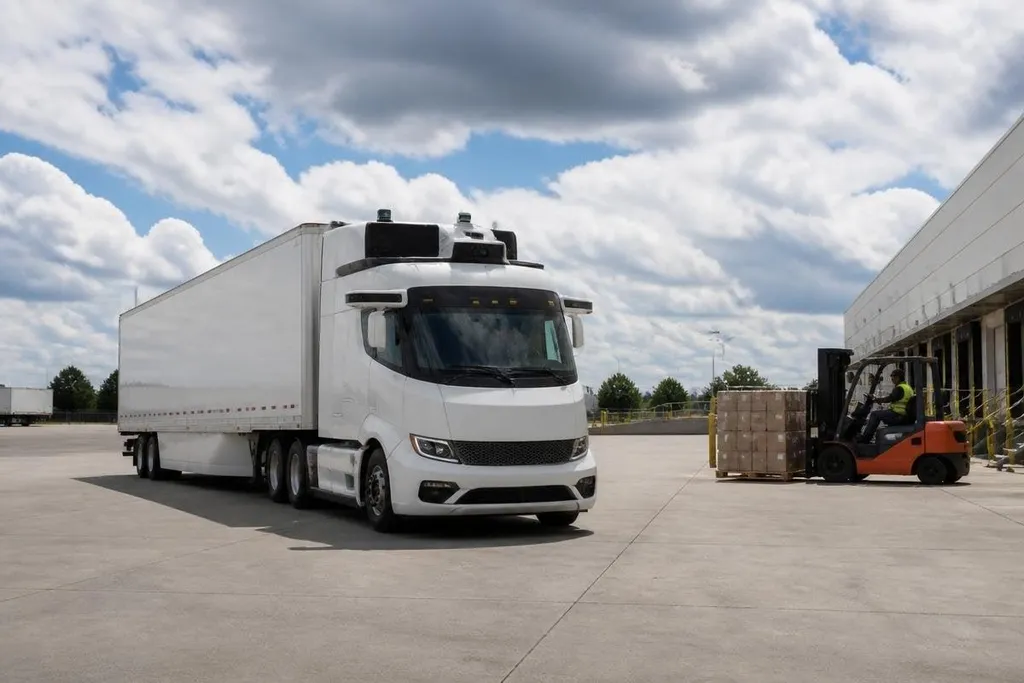
A self-driving truck still needs a freight plan, a safe route, a service team, and a way to handle problems on the road. That spreads the business case beyond selling trucks or cutting driver hours.
- Truck operators may buy road time as a service instead of owning every part of the system.
- Service firms can support sensors, maps, remote help, roadside work, and fleet software.
- The hard question is where autonomous driving works often enough to cover its cost.
The first sale may be a freight service
A trucking company could pay for autonomous transport on a defined route between two sites. The truck would handle the main road section, while people manage loading, unloading, local streets, and unusual events.
This model gives operators a smaller change to manage. They can test one lane, one cargo type, or one pair of terminals before changing a wider fleet. A supplier also gains a clear operating area for its maps, safety rules, and support plans.
The route matters because the truck software works from sensor data and mapped roads.
Construction zones, heavy rain, poor markings, and mixed traffic can add work for the system. A short, repeatable lane may be easier to run than a long trip with many road types.
Businesses around the truck
The truck is only one part of the service. Companies will need people and equipment to inspect sensors, clean cameras, repair wiring, update maps, and check software after a road change.
Terminals may also need new jobs. A worker could move a trailer into a loading area, check that the vehicle is ready, or take control when the truck reaches a road that the automated system cannot handle. These tasks call for training, clear handoffs, and records that show what happened during each trip.
Insurance and safety firms have work to do as well. They may review driving data, set rules for remote support, and decide how responsibility is divided among the truck maker, software supplier, carrier, and cargo owner. The answer will affect contract prices before it affects truck sales.
Paid freight work depends on more than a truck completing a test run. Robot24.com autonomous trucking reports can help you track which projects name a paying carrier, route, freight type, and service date. Those details connect the business case to the next question: how transport companies might charge for the work.
New ways to charge for transport
A supplier could charge by mile, by trip, by operating hour, or through a regular software and support fee. The best fit will depend on who owns the truck, who pays for maintenance, and how much work remains at the terminals.
A carrier may prefer a per-trip charge because the cost is easy to compare with a normal haul. A truck maker may prefer a service contract that includes software updates, sensor checks, and remote support. Cargo owners may pay for a delivery result instead of buying the vehicle themselves.
That choice changes the risk. A fixed fee leaves more repair and downtime risk with the supplier. A truck purchase leaves more cost and operating work with the carrier. Contracts will need clear terms for missed trips, system handoffs, damaged cargo, and road conditions outside the approved route.
Limits that decide the market
The business case weakens when a truck needs frequent human help, special road equipment, or long waits at a terminal. A system that handles one road well may still need costly support across a full delivery network.
Weather is another test. Rain can reduce camera quality, while snow can cover lane markings and sensors. Road works can change the route without much warning. These conditions don't end the market, but they narrow the places where a service can run with predictable cost.
Regulators and customers will also ask for records. A company may need to show how the truck sensed an obstacle, who approved a remote action, and why a trip stopped. Until those records and liability rules are clear, many firms will test small operations rather than commit to a large fleet.
A practical screen for a business idea
Use this checklist before spending money on an autonomous truck service:
- Pick one route with repeatable road conditions and known terminal points.
- Name the owner for decisions when the truck needs help.
- Count terminal work at loading bays, depots, and local roads.
- Price the support for sensors, cleaning, repairs, map updates, insurance, and remote help.
- Set stop rules for trips that return, pause, or need a human driver.
I'd back businesses that sell the work around a defined route before I backed a plan built on nationwide autonomy.
The next useful proof will be a paid service that reports completed trips, human interventions, weather limits, and total support cost. Those figures will show which autonomous truck plans can carry freight and which ones still need a controlled test site.